COFFEE & A ROLL
This website contains content related to cannabis.
Are you 21 years of age or older?
By entering, you confirm you meet the legal age requirement
in your jurisdiction for cannabis-related content.
Region
Southern Africa
Established
Centuries (indigenous use)
Cultivation
Outdoor — Subtropical
Legal Status
Private use legal since 2018
History
Cannabis, known locally as 'dagga,' has been used by indigenous peoples of southern Africa for centuries. The Khoisan and Bantu peoples used it medicinally and ceremonially.
South Africa was one of the first countries to ban cannabis in 1928. Despite prohibition, dagga remained widely used. 'Durban Poison' became one of the most famous African strains globally.
In a landmark 2018 ruling, South Africa's Constitutional Court declared private use and cultivation a constitutional right.
Cultivation
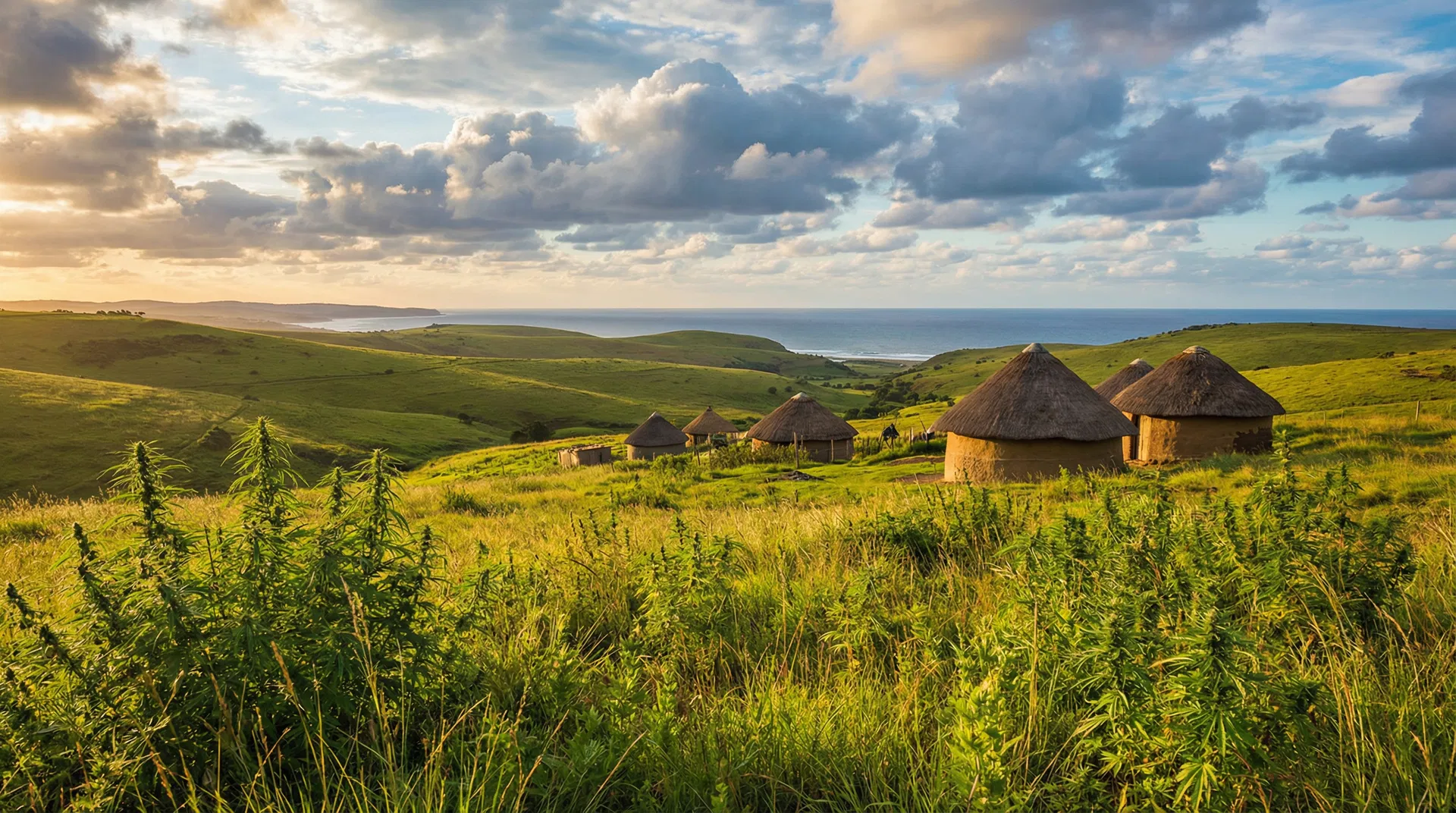
Cannabis thrives in South Africa's subtropical eastern regions. Sativa-dominant landraces grow tall in the warm climate, with large-scale outdoor farming in the Transkei and KwaZulu-Natal.
Hash Making & Processing
Hash making is not a traditional South African practice. The country is known for its flower, particularly Durban Poison.
Legal Landscape
Private use and cultivation is a constitutional right since 2018. Commercial sales are still being regulated. The ruling was driven by the activism of the 'Dagga Couple' — Julian Stobbs and Myrtle Clarke.
Key Figures
The Dagga Couple (Julian Stobbs & Myrtle Clarke)
Traditional healers (sangomas) who use cannabis medicinally