COFFEE & A ROLL
This website contains content related to cannabis.
Are you 21 years of age or older?
By entering, you confirm you meet the legal age requirement
in your jurisdiction for cannabis-related content.
AFGHANISTAN & THE HINDU KUSH
The Hindu Kush — Birthplace of Hashish, Cradle of Indica
Region
Central & South Asia
Established
~2000 BC (Scythian use)
Cultivation
Outdoor — Mountain Valleys
Legal Status
Illegal but widely cultivated
History
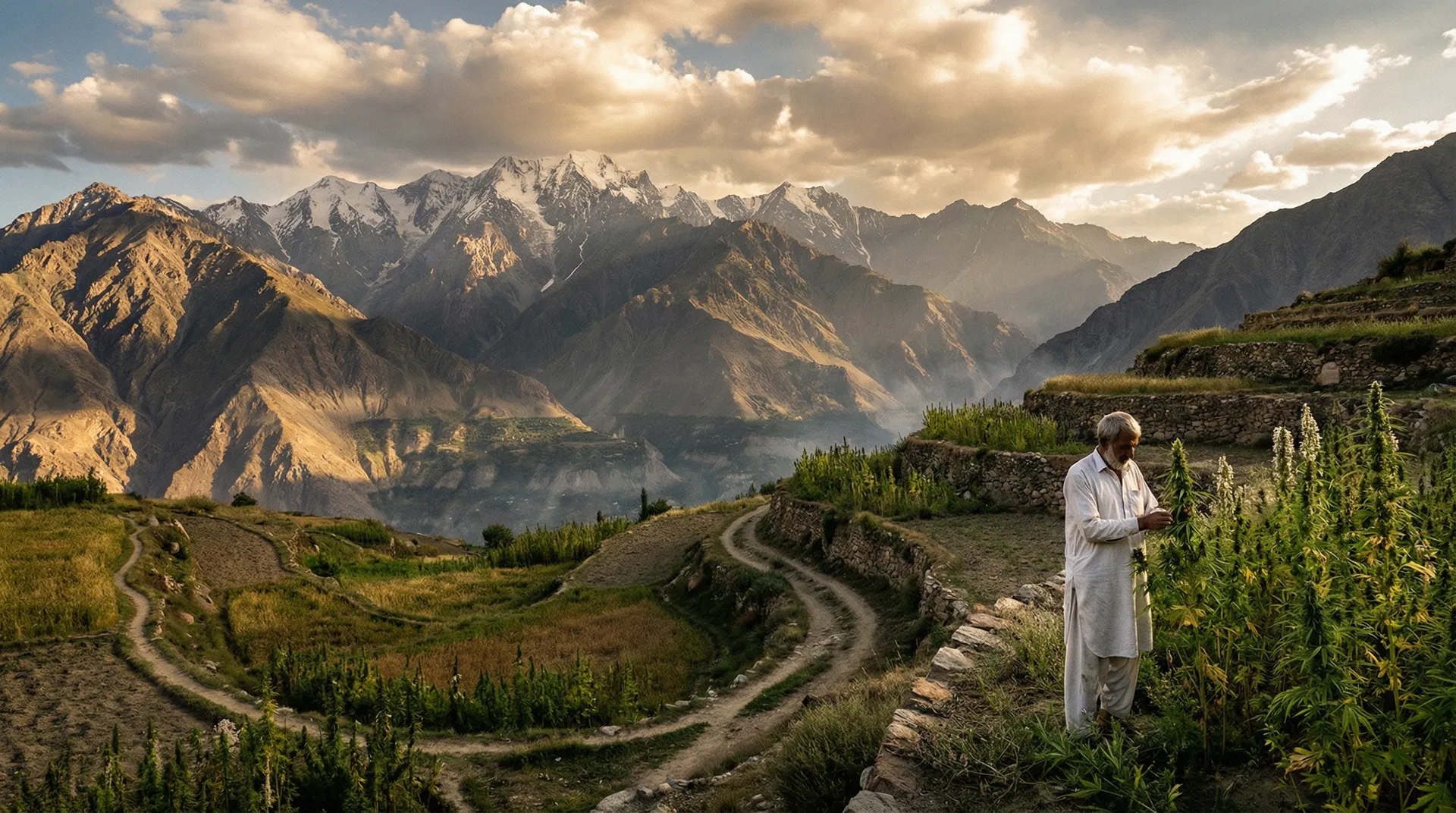
The Hindu Kush mountain range — stretching 800 kilometers across Afghanistan and Pakistan — is the ancestral homeland of Cannabis indica. For millennia, cannabis has grown wild in these towering valleys, evolving into the short, bushy, resinous plants that would eventually give rise to the majority of modern cannabis genetics.
Archaeological evidence suggests the Scythians used cannabis in the Hindu Kush region as early as 2000 BC, burning it in enclosed tents for ritualistic and recreational purposes. The mountains served as a crossroads between Central Asian, Persian, and Indian cannabis cultures.
By the 1960s and 1970s, the famous 'Hippie Trail' brought Western attention to Afghan hashish. Travelers journeyed overland from Europe through Turkey, Iran, and Afghanistan to India and Nepal, discovering the legendary potency of Afghan Black hash along the way. The Brotherhood of Eternal Love — a California-based group — smuggled Afghan hash to the West, creating an enduring mystique.
After the Soviet invasion in 1979, cannabis cultivation became intertwined with the funding of Mujahideen resistance. Warlords and tribal leaders controlled the hash trade, using profits to finance military operations. This pattern continued through decades of conflict, making Afghanistan the world's largest hashish producer — a title it holds to this day.
Cultivation
Cultivation is predominantly outdoor in the mountain valleys of the Hindu Kush range, between 1,500 and 3,000 meters elevation. The plants are short, bushy indica varieties that have adapted over millennia to the harsh mountain conditions — cold nights, intense sun, and dry air.
The dry climate is ideal for resin production, as the plants produce thick trichome layers to protect against UV radiation at high altitude. Traditional landrace strains have been cultivated by farming families for generations, passed down as living heritage.
The combination of altitude, temperature variation, and mineral-rich soil produces some of the most resinous cannabis on the planet. These Hindu Kush genetics are the foundation of virtually every modern indica hybrid.
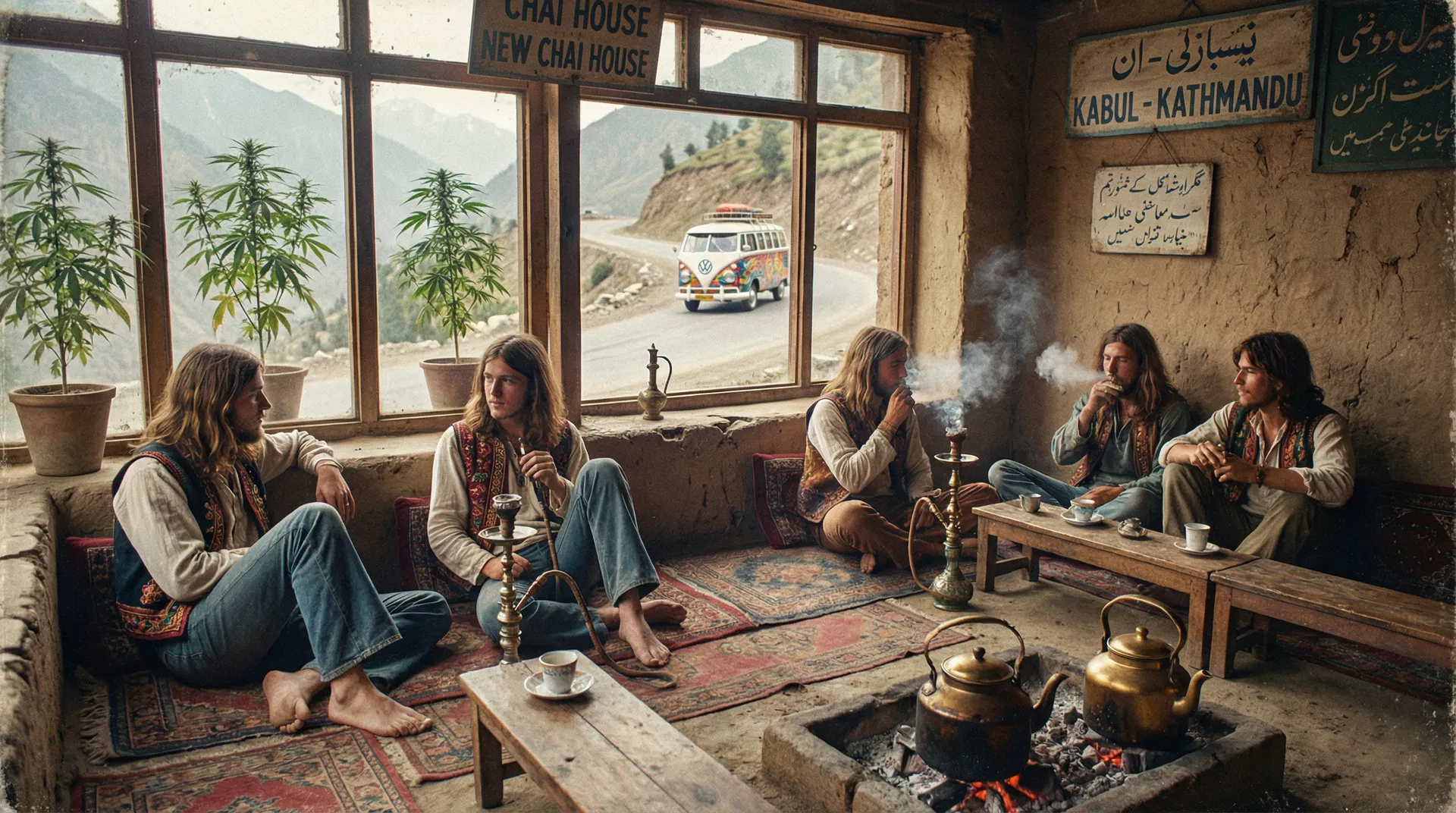
The Hippie Trail — Kabul to Kathmandu chai house, 1973
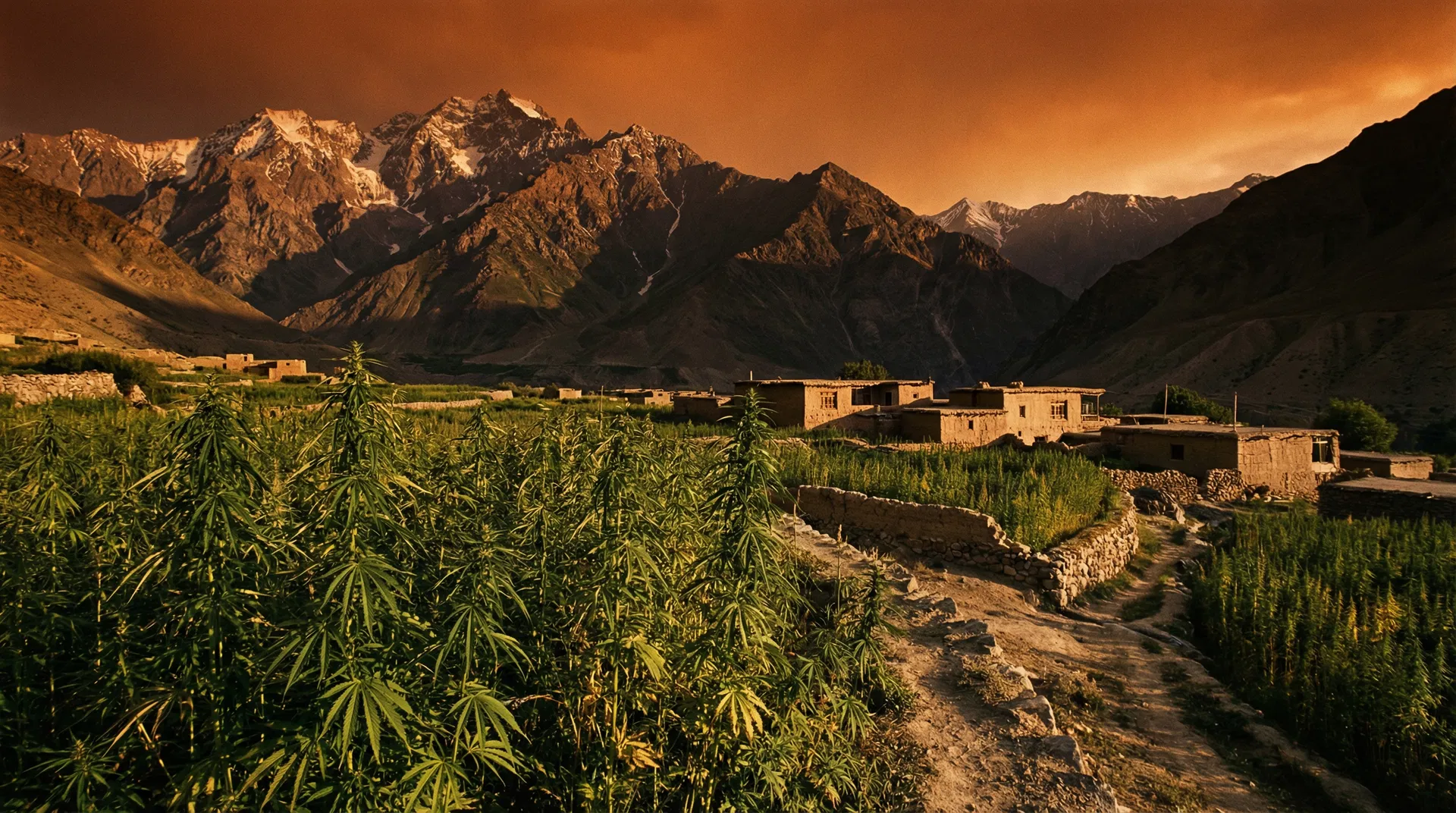
Hindu Kush mountain valley — cannabis growing wild
Hash Making & Processing
Afghanistan is renowned for two primary hash-making techniques: hand-rubbing (charas) and dry sifting. The most famous product is Afghan Black — a dark, pliable, intensely potent hashish that has been prized for centuries.
In the dry sifting method, harvested and dried cannabis plants are beaten over fine mesh screens. The collected trichome powder is then pressed into slabs or balls using heat and pressure. The quality varies by region, with Mazar-i-Sharif and the Balkh province producing some of the most sought-after varieties.
The hash is typically pressed into large slabs stamped with regional markings — a branding tradition that predates modern commerce by centuries.
Legal Landscape
Cannabis remains illegal in Afghanistan, yet it is one of the most widely cultivated crops in the country. The Taliban has alternately banned and taxed production depending on political circumstances and revenue needs.
The UNODC estimates between 10,000 and 24,000 hectares are under cannabis cultivation annually. Despite illegality, cannabis cultivation is deeply embedded in the rural economy, with entire communities dependent on the hash trade.
Key Figures
The Mujahideen commanders who controlled the hash trade during the Soviet-Afghan War
The Brotherhood of Eternal Love — who smuggled Afghan hash to California in the 1960s-70s
Tribal farming families who have maintained landrace genetics for generations