COFFEE & A ROLL
This website contains content related to cannabis.
Are you 21 years of age or older?
By entering, you confirm you meet the legal age requirement
in your jurisdiction for cannabis-related content.
Region
North Africa
Established
~15th Century
Cultivation
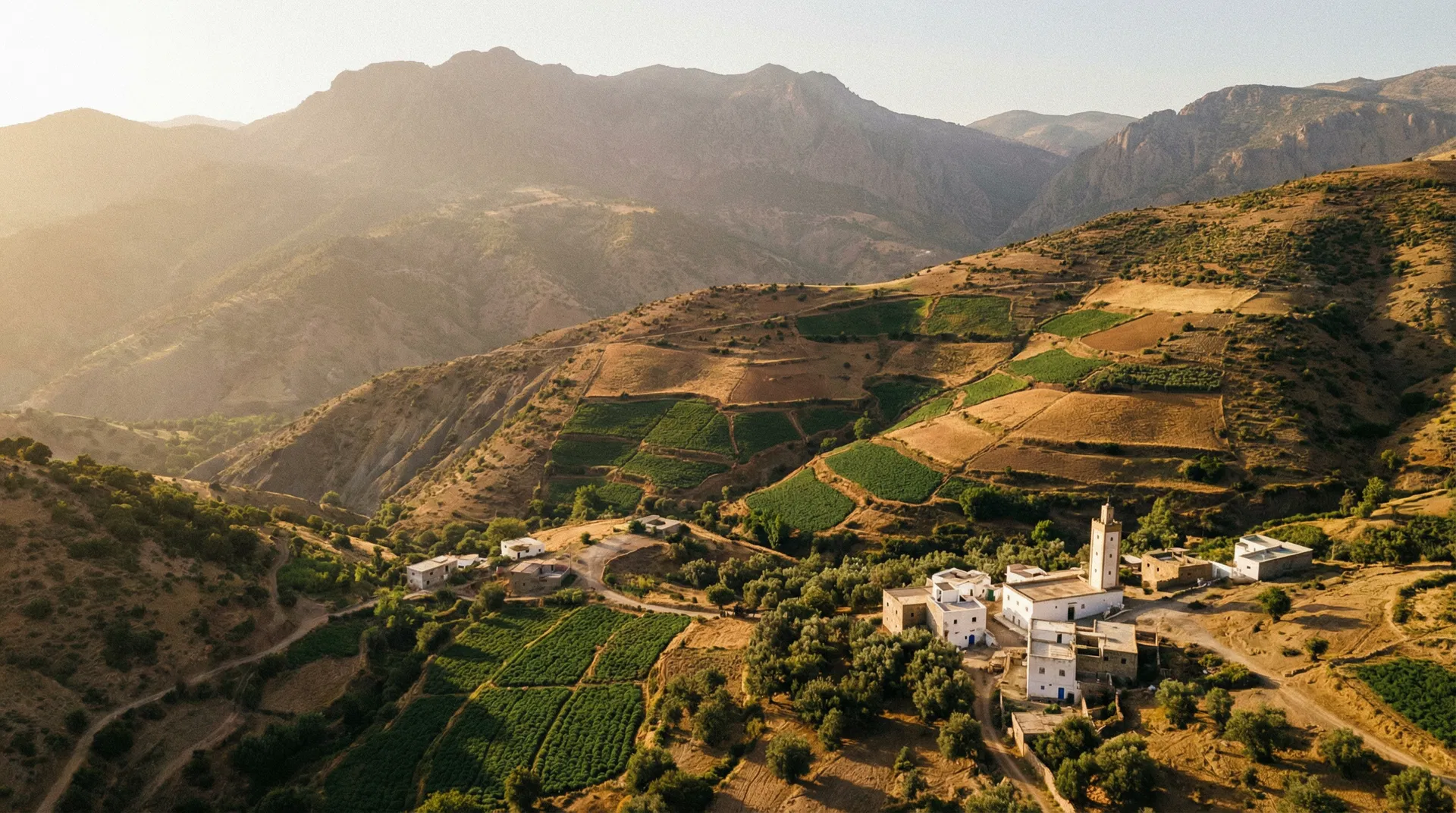
Outdoor — Terraced Hillside
Legal Status
Medical legal since 2021
History
Cannabis cultivation in Morocco's Rif Mountains dates to at least the 15th century, possibly introduced by Arab traders traveling through North Africa. The Ketama region became synonymous with hashish production, its name alone evoking images of golden kief and pressed slabs.
Under French and Spanish colonial rule, cannabis cultivation was tolerated as a traditional practice. After Moroccan independence in 1956, King Hassan II unofficially allowed Rif cultivation to continue, understanding that the region's economy depended on it.
By the late 20th century, Morocco had become the world's number one hashish supplier to Europe, with an estimated 800,000 people involved in the cannabis economy. The Rif region produced the vast majority of hash consumed across the continent.
Cultivation
Cannabis is grown outdoors on the terraced hillsides of the Rif Mountains, using traditional farming methods passed down through generations. The terrain is steep and the soil is poor for most crops, making cannabis one of the few viable agricultural options.
Traditional kif varieties are sativa-dominant, adapted to the Mediterranean climate. Recently, modern hybrid seeds from European breeders have been introduced, dramatically increasing potency but changing the character of traditional Moroccan hash.
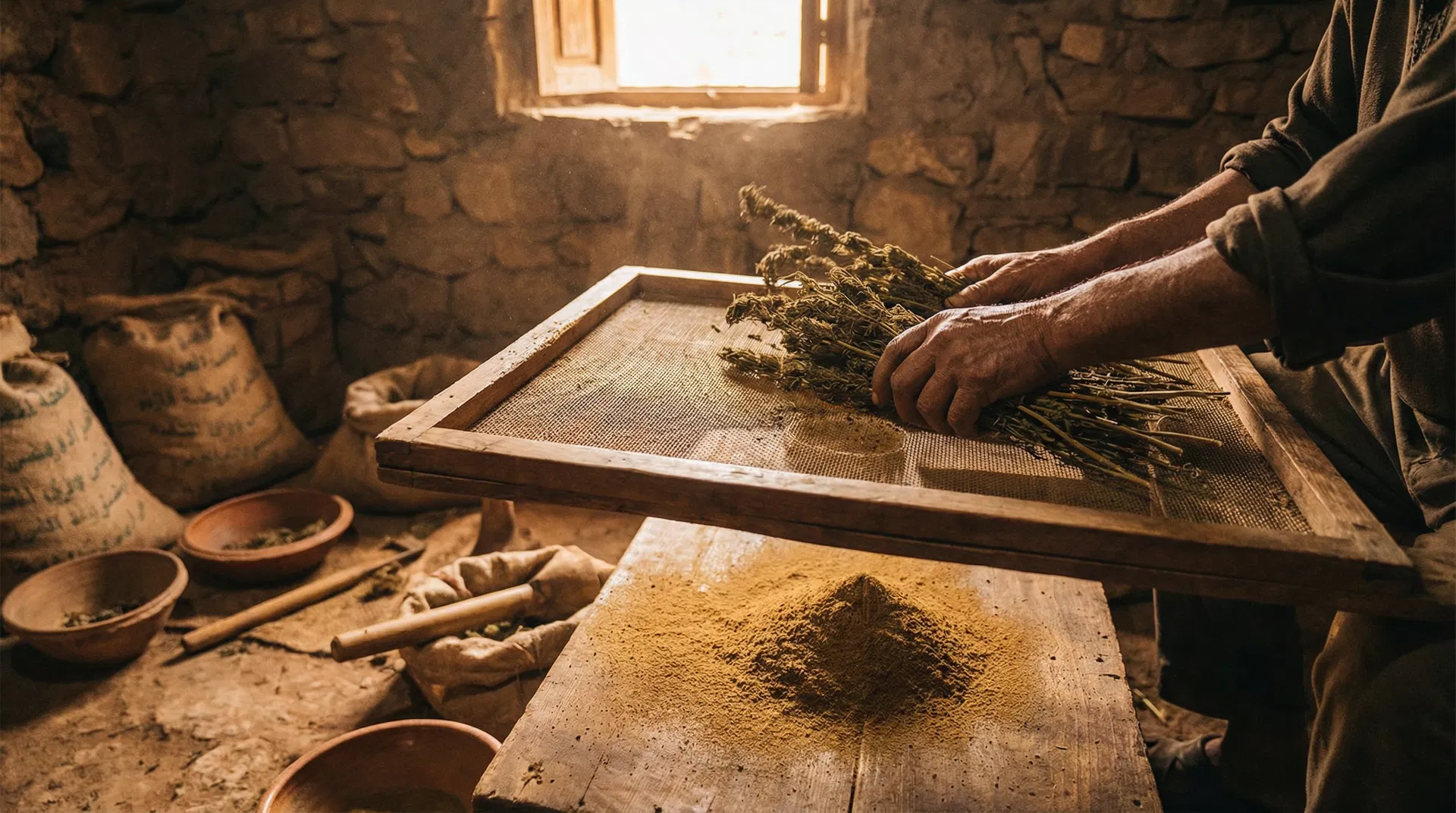
Traditional Moroccan dry sifting technique
Hash Making & Processing
Moroccan hash is produced through dry sifting — one of the oldest and most refined techniques in the world. Dried cannabis plants are beaten over fine mesh screens, and the golden trichome powder (kief) collects below.
Multiple sifting passes produce different grades: the first sift yields the highest quality. The collected kief is then heated and pressed into slabs. Traditional Moroccan hash is light brown and crumbly, with a distinctive spicy, earthy aroma. The best — often called '00' or 'double zero' — are smooth, aromatic, and potent.
Legal Landscape
Morocco legalized cannabis for medical and industrial use in 2021 — one of the most significant cannabis policy changes in the Arab world. Recreational use remains prohibited.
The legalization was driven by economic pragmatism — the Rif region's economy depends heavily on cannabis, and the government sought to bring the industry into a regulated framework.
Key Figures
The Ketama farming families who have cultivated cannabis for centuries
King Hassan II, whose tacit approval allowed the Rif cannabis economy to flourish