COFFEE & A ROLL
This website contains content related to cannabis.
Are you 21 years of age or older?
By entering, you confirm you meet the legal age requirement
in your jurisdiction for cannabis-related content.
Region
North America
Established
1500s (Spanish colonizers)
Cultivation
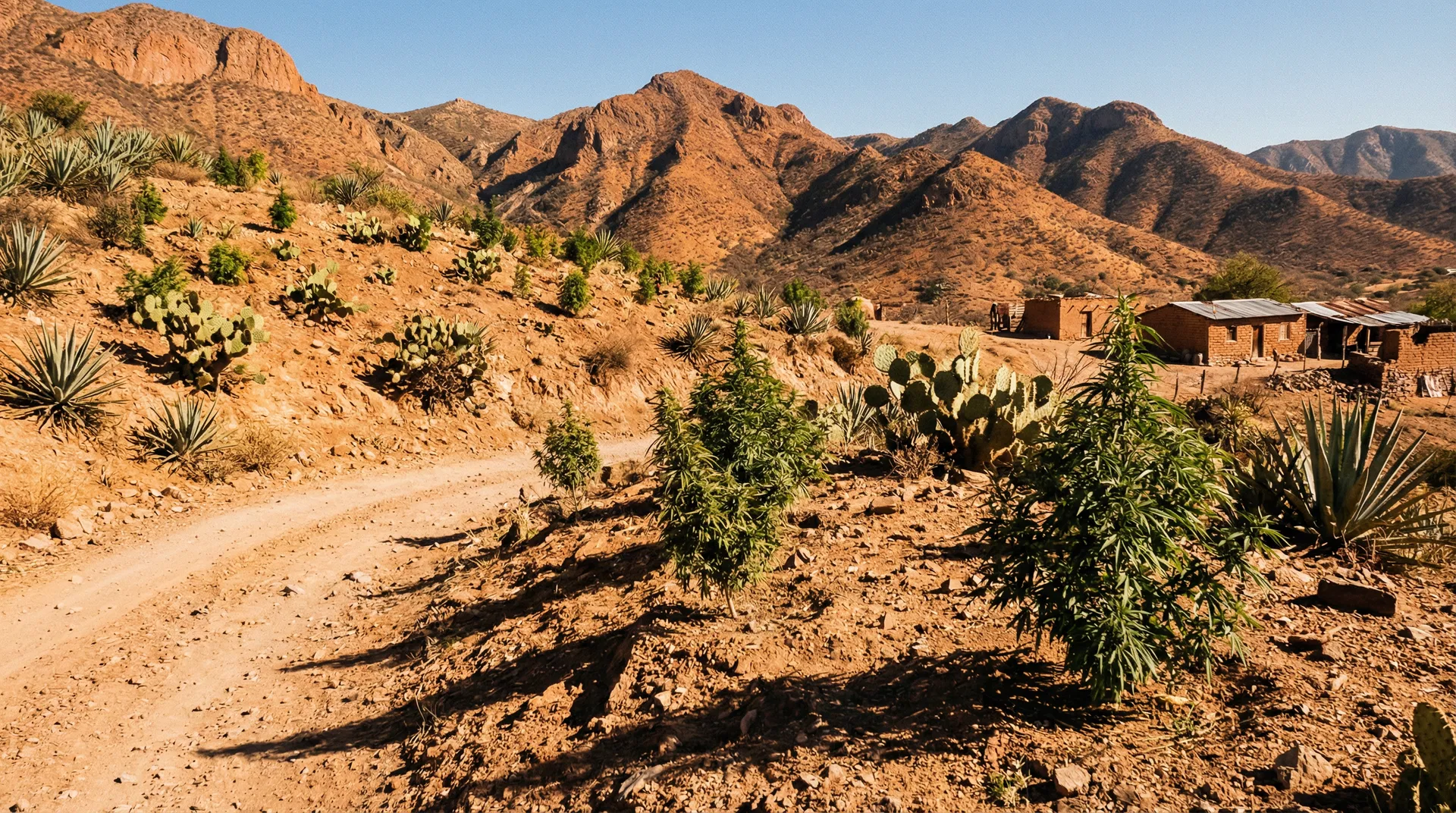
Outdoor — Large-Scale
Legal Status
Decriminalized, legalization pending
History
Cannabis arrived in Mexico with Spanish colonizers in the 1500s, originally cultivated for hemp fiber. Over centuries, indigenous populations developed recreational and medicinal uses for the plant.
By the early 1900s, Mexican immigrants brought recreational cannabis use to the United States, and the word 'marijuana' — a Spanish term — was deliberately used by American prohibitionists to stigmatize the plant and associate it with Mexican culture.
Mexico became a major cannabis supplier to the US through powerful cartels. The Sinaloa region became infamous for large-scale production. The famous Acapulco Gold and Oaxacan varieties represent Mexico's contribution to global cannabis genetics.
Cultivation
Cannabis is cultivated outdoors across multiple states — Sinaloa, Guerrero, Michoacán, and Oaxaca. Traditional sativa landraces grow exceptionally tall, producing long flowering cycles and complex terpene profiles.
Historically, much of Mexico's cannabis was compressed into 'brick weed' for transport to the US — a far cry from the premium Acapulco Gold that was highly prized in the 1960s-70s.
Hash Making & Processing
Hash making is not a traditional Mexican practice. Mexico has historically been known for flower, particularly compressed cannabis for export.
Legal Landscape
Mexico's Supreme Court ruled recreational cannabis use constitutional in 2021, but full legalization legislation has stalled. Medical cannabis has been legal since 2017.
Personal use has been decriminalized, but the cartels still control the illegal market.
Key Figures
The Oaxacan growers who maintained traditional landrace genetics
Modern reform advocates pushing for full legalization